


AGENDA
16-17 September 2026
Eindhoven, The Netherlands
Stay tuned to get the latest updates!
Meet the companies that are going to present in 2026
Our team is currently organizing the agenda for the 2026 event.
Stay tuned and fill out this form to receive the latest updates!

EssilorLuxottica
POPULAR - Prescription Optics Providing a Universal Lens for Augmented Reality Eyewear
00:00 pm

joint

Mario Possiwan


EssilorLuxottica
00:00 pm

Meta
AI glasses
00:00 pm
joint

Berthold Hahn
Meta
00:00 pm
ALLOS Semiconductors
300mm GaN-on-Si Epitaxy: Overcoming Cost and Yield Barriers for CMOS-Integrated MicroLEDs
00:00 pm
joint

Burkhard Slischka
Co-founder, CEO
ALLOS Semiconductors
00:00 pm

Applied Materials
From Lab to Fab: Industrializing High-Index Waveguides and Metrology for Mass-Market AR Eyewear
00:00 pm
joint

Rutger Thijssen
Technical Marketing Director
Applied Materials
00:00 pm
Cellid
00:00 pm
joint

Satoshi
Cellid
00:00 pm
Holst Centre
Laser-Based Mass Transfer and Photonic Soldering for High-Yield MicroLED Integration
00:00 pm
joint

Holst Centre
00:00 pm
Instrument Systems
Fast and Precise Optical Metrology for MicroLED Wafers and Near-Eye Display Quality Control
00:00 pm
joint

Instrument Systems
00:00 pm

Lumus
00:00 pm
joint

Yochay Danziger
CTO
Lumus
00:00 pm

Nanoscribe GmbH & Co. KG
Additive 3D Microfabrication: Enabling Complex Micro-Optics and Compound Lenses for AR Systems
00:00 pm
joint
Nanoscribe GmbH & Co. KG
00:00 pm

QubeDot
Direct-View MicroLED Arrays: Bridging the Gap Between Pixel Pitch and Optical Performance
00:00 pm
joint

Jan Gülink
CTO
QubeDot
00:00 pm

University of Rochester
00:00 pm
joint
University of Rochester
00:00 pm

VueReal
MicroSolid Printing: A Scalable Platform for High-Transparency and High-Density MicroLED Displays
00:00 pm
joint

VueReal
00:00 pm

vitrealab
Laser-LCoS – The Solution to AR Smart Glasses Challenges
00:00 pm
joint

Ronny Timmreck
For years, the AR industry has faced a critical challenge: how to combine the precision and efficiency of laser illumination with the proven performance of LCoS, the most mature and compact microdisplay technology. Traditional attempts have been hindered by coherence artefacts and uneven illumination.
Vitrealab, a pioneering photonics company, has developed a breakthrough solution — the Quantum Light Chip. This Photonic Integrated Circuit (PIC) acts as a unique laser light source that delivers uniform, artifact-free illumination to LCoS panels in the most efficient way. By bridging the strengths of lasers and LCoS, this innovation paves the way for brighter, more efficient, and truly scalable AR smart glasses.
vitrealab
00:00 pm
For years, the AR industry has faced a critical challenge: how to combine the precision and efficiency of laser illumination with the proven performance of LCoS, the most mature and compact microdisplay technology. Traditional attempts have been hindered by coherence artefacts and uneven illumination.
Vitrealab, a pioneering photonics company, has developed a breakthrough solution — the Quantum Light Chip. This Photonic Integrated Circuit (PIC) acts as a unique laser light source that delivers uniform, artifact-free illumination to LCoS panels in the most efficient way. By bridging the strengths of lasers and LCoS, this innovation paves the way for brighter, more efficient, and truly scalable AR smart glasses.

The Future of XR Optics: Defining the Display Engine Requirements for Next-Gen Wearable AI
00:00 pm
joint

Bernard Kress
Optics Lead, PhD
00:00 pm

Sony
Challenges in democratizing AR glasses
00:00 pm
joint

Hiroshi Mukawa
Corporate Distinguished Engineer
The success of display-less AI glasses suggests that user acceptance is driven less by technological sophistication and more by perceived daily value, comfort, and social compatibility. AR glasses with displays promise richer visual augmentation, yet they struggle to justify their compromises in weight, power consumption, and price. This tension reveals a growing gap between what AR technologies can deliver and what users are willing to adopt.
In this keynote, we examine the challenges in democratizing AR glasses by aligning microdisplay performance, waveguide design, and system architecture with realistic user value propositions. Rather than pursuing maximal specifications, the discussion emphasizes the importance of “good-enough AR” optimized for real-world use cases. The talk proposes a shift in design philosophy—from feature-driven development to adoption-driven engineering—as a pathway toward scalable AR glasses.
Sony
00:00 pm
The success of display-less AI glasses suggests that user acceptance is driven less by technological sophistication and more by perceived daily value, comfort, and social compatibility. AR glasses with displays promise richer visual augmentation, yet they struggle to justify their compromises in weight, power consumption, and price. This tension reveals a growing gap between what AR technologies can deliver and what users are willing to adopt.
In this keynote, we examine the challenges in democratizing AR glasses by aligning microdisplay performance, waveguide design, and system architecture with realistic user value propositions. Rather than pursuing maximal specifications, the discussion emphasizes the importance of “good-enough AR” optimized for real-world use cases. The talk proposes a shift in design philosophy—from feature-driven development to adoption-driven engineering—as a pathway toward scalable AR glasses.
Adeia
3D System Integration for MicroLEDs: Hybrid Bonding and Co-Optimization of GaN and Silicon
00:00 pm
joint
Adeia
00:00 pm

Avicena Tech
Leveraging MicroLEDs for High-Speed Optical Interconnects in AI Datacenters and Chip-to-Chip Comms
00:00 pm
joint

Greg
Avicena Tech
00:00 pm
Eulitha
High-Throughput Lithography for MicroLEDs and Optical Gratings using Displacement Talbot Technology
00:00 pm
joint

Harun Solak
CEO, Founder
Eulitha
00:00 pm
Hongshi Intelligence
Monolithic Full-Color MicroLED Microdisplays Using Hybrid Stack Structures (HSS)
00:00 pm
joint

Yi Liu
VP New Business Development
Hongshi Intelligence
00:00 pm
KGOnTech
The Reality of AR Display Engines: A Comparative Analysis of MicroLED, LCoS, and Laser Scanning
00:00 pm
joint

Karl Guttag
President
KGOnTech
00:00 pm
Morphotonics
Scaling Large-Area Nanoimprint Lithography for Mass Production of AR Waveguides and AI Glasses
00:00 pm
joint
Morphotonics
00:00 pm
Optinvent
Molded Polymer Relfective 2D Waveguide - A breakthrough for consumer AR
00:00 pm
joint

Kayvan Mirza
CEO, Co-founder
This presentation explores the principles, challenges, and advantages of polymer-based 2D waveguides for AR displays. Diffractive and reflective technologies are compared for advantages and shortcomings where molded polymer reflective waveguides are shown to offer lightweight, low-cost, and color-uniform alternatives with superior efficiency (5× higher). The talk concludes with challenges and looks ahead to future trends.
Optinvent
00:00 pm
This presentation explores the principles, challenges, and advantages of polymer-based 2D waveguides for AR displays. Diffractive and reflective technologies are compared for advantages and shortcomings where molded polymer reflective waveguides are shown to offer lightweight, low-cost, and color-uniform alternatives with superior efficiency (5× higher). The talk concludes with challenges and looks ahead to future trends.

UC Santa Barbara
Advancements in Ultra-Small InGaN MicroLEDs: Sub-1µm Pixel Efficiency and Native Color Growth
00:00 pm
joint
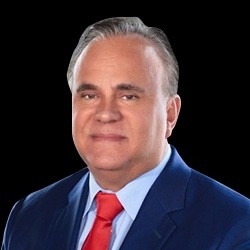
Steven DenBaars
Professor & Co-Director, SSLEEC
UC Santa Barbara
00:00 pm
Vizon Tech
What it'll take, to make Augmented Reality Glasses a mass adopted Reality.
00:00 pm
joint

Nikhil Sharma
Vizon Tech
00:00 pm

WEVE Co., Ltd
Innovations in MicroLED Driver Architectures and System-Level Integration for Wearables
00:00 pm
joint
WEVE Co., Ltd
00:00 pm
Topics Covered
MicroLEDs Displays + AR / VR / MR, Quantum Dots & Color Conversation, MiniLEDs, Microdisplays, Automotive, Wearables, Applications, Market Analysis
Speakers at our past events


Conference Agenda
Please note, This Agenda is subject to change and may be amended leading up to the event.
Day 1
September 2025
The times below are Berlin/Eindhoven time.
Track 1 - Auditorium (Ground Floor)
Track 1 - Auditorium (Ground Floor)
Track 2 - Curie Room (Upper floor)
Day 2
September 2025
Track 1 - Auditorium (Ground Floor)
Track 1 - Auditorium (Ground Floor)
Track 2 - Curie Room (Upper floor)
.jpg)










BACK TO TOP