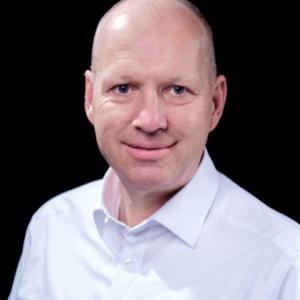
Ralph Aschenbach
Coherent
Ralph Aschenbach spoke at MicroLED Connect in 2025 and 2026, representing Coherent.
Fast and flexible - how lasers can solve the current technical bottlenecks for the mass production of microLED displays
Talk · 16 September 2026
→ See the MicroLED Connect & AR/VR Connect 2026 agenda
There are several challenges in the microLED display manufacturing that need to be solved. Lasers are known as a precise, fast but also flexible tool in many cases. For the processing of microLED’s lasers are key to help solving current technical bottlenecks like wafer inhomogeneities and dead pixels. We will present how lasers are used for fast and flexible binning to provide wavelength randomized templates and displays. Further, we will compare the potential mass transfer throughput with other transfer technologies for different display formats and application.
▶ Watch video highlights from this talk
- ▶ How does UV transfer S adapt for data communication instead of TV panels?
- ▶ Can high-speed microLED transfer reach five nines and 1.7-micron placement accuracy across 120,000 LEDs?
- ▶ Does the reported microLED transfer yield include electrical functionality, or only optical inspection and physical placement?
- ▶ Can laser transfer overcome crosstalk to handle sub-5-micron microLEDs with street widths down to two microns?
A breakthrough in industrial microLED in laser mass transfer
Talk · 24 September 2025
→ See the MicroLED Connect & AR/VR Connect 2025 agenda
For several years mass transfer of microLED’s has been amed as one of the most challenging process steps in microLED display manufacturing. Throughput, yield, flexibility, and small microLED handling must significantly improve to establish microLED’s in the display industry. The first attempts have been made and some pilot production lines and microLED displays are available today. The key to industrial mass transfer is to provide a holistic solution that covers the fast and precise handling of donor wafers and receiver panels that could be backplanes or temporary carriers. Further, a package of diagnostics and software is required to enable and guarantee a high precise and high throughout transfer while using e.g. different levels of binning’s to compensate inhomogeneities from the EPI-wafer. We will present our new turn-key system that is a breakthrough in industrial microLED display manufacturing with all the features nd benefits mentioned before.
▶ Watch video highlights from this talk
- ▶ Can a multi-donor stage architecture eliminate 50 percent of laser idle time in MicroLED mass transfer?
- ▶ How can in-situ metrology and camera-based calibration replace expensive interferometers in microLED production?
- ▶ Why does long-wavelength infrared laser transfer fail at the sub-five-micron MicroLED scale?